Around Dunnellon: A Year-Round Gutter Checklist for Florida Homeowners
Living around Dunnellon means paying attention to water. Not in an abstract way, and not only when a storm has a name. Roof runoff shows up fast in Florida, especially through the humid months when afternoon thunderstorms can dump a lot of water in a short window. When gutters and downspouts are doing their job, that water gets collected and sent where it can soak in safely. When they are not, it tends to announce itself in the messiest possible places: splashing against the foundation, washing out mulch, carving ruts in the lawn, and leaving wet spots that linger longer than they should.

That is why a year-round gutter checklist Florida homeowners can actually use matters more than a one-time cleaning. Gutters are not a set-it-and-forget-it part of the house here. They are part of runoff control, landscape protection, and routine exterior maintenance. UF/IFAS guidance consistently points homeowners toward the same basic goal: keep roof runoff on site when possible, and direct it into areas that can absorb it, like turf, beds, rain gardens, or other pervious spaces. At the same time, keep that water away from the house so it does not pool near the foundation or create pest-friendly damp zones.
Around Dunnellon, that means thinking beyond the gutter trough itself. The whole path matters, from roof edge to downspout to where the water lands.
What a good gutter system really does in Florida
A lot of homeowners think of gutters as a leaf problem. They are partly right, but that is a narrow view. A functioning gutter system is really a drainage system attached to the roofline. Its job is to catch fast-moving runoff, slow it down a bit, and guide it away from vulnerable areas.
That matters because Florida rain rarely arrives in a gentle, all-day drizzle. More often, you get a burst of heavy water. In those moments, a clogged elbow or sagging run can turn one corner of the house into a waterfall. Repeated over a season, that kind of overflow can beat up planting beds, stain exterior surfaces, and dump too much water into one strip of soil.
The downspouts matter just as much as the gutters. UF/IFAS recommends directing roof runoff to areas that absorb water rather than letting it collect near the home. If a downspout empties right next to the foundation, it defeats the point of having gutters in the first place. A better setup sends water to lawn, planted beds, or another pervious area where it can infiltrate instead of racing across hard surfaces.
This is also where many so-called gutter myths Florida homeowners hear start to fall apart. One common myth is that gutters only matter if your lot has dramatic slopes. Another is that if water drains off the roof, nature will sort out the rest. In practice, small drainage mistakes add up. You do not need a hillside to get erosion. A repeated splash zone beside a lanai, a bare strip under the eaves, or chronic pooling at one corner is enough to tell you runoff is not being managed well.
The checklist works best when you think by season
A Florida gutter routine is less about dates on a calendar and more about what the weather is doing. Still, a seasonal rhythm helps. If you check the same trouble spots at the same times each year, small issues are easier to catch before they turn into repairs.
- Late winter to early spring: inspect fasteners, seams, and downspout discharge areas before the heavier rain pattern builds.
- Early summer: clear debris, test flow with a hose if needed, and confirm water is moving away from the house into absorbent areas.
- Peak storm season: do quick visual checks after major rain to spot overflow, loose sections, or washout below downspouts.
- Fall into early winter: remove accumulated leaf litter and check that no standing water or persistent damp spots remain near the foundation.
That short routine covers most of what a homeowner actually needs to notice. The key is consistency. One careful look in March and another in October beats waiting until water is pouring over the front entry during a summer downpour.
Spring is for inspection, not just cleaning
By spring, many Florida homes have already gathered enough debris to affect flow, even if the gutters do not look packed from the ground. Twigs, roof grit, damp leaf fragments, and that muddy sludge that forms in low spots can all reduce capacity.
This is the time to look at alignment and drainage patterns, not just visible debris. Stand back after a rain if you can do so safely and watch where the water exits. If a downspout is emptying into an area that now has compacted soil, thinning turf, or exposed roots, the runoff may need to be redirected. UF/IFAS guidance is clear that directing water to planted or grassy areas helps reduce runoff and erosion. What worked when the yard was fresh may not work as well after a few seasons of concentrated discharge.
Spring is also when many homeowners start pricing exterior projects, so it is a natural time to think about gutter installation cost factors Florida households should weigh before replacing a system. The exact price depends on the home and the scope, and it is better to think in terms of variables than fixed numbers. The obvious factor is size, meaning how much roof edge needs coverage. Material choice matters. So does the number of corners, downspouts, and difficult roof sections. Access can change labor demands too. A straightforward single-story run is one thing. A house with multiple elevations, tight landscaping, or tricky tie-ins is another.
There is also the decision between sectional systems and seamless gutters Williston FL contractors and other nearby installers often recommend. Without overstating it, seamless designs appeal to many homeowners because fewer joints can mean fewer potential leak points over time. That does not make them maintenance-free, but it is one of the reasons they are often discussed when a full replacement is on the table.
Summer is when weak spots show themselves
Summer storms are honest. They will reveal every low spot, clog, and loose bracket you missed in spring.
If you only do one visual test all year, do it during or right after a heavy rain. Watch for spillover at corners, drips from seams, and water sheeting behind the gutter instead of into it. Then look down. Is there a trench forming in the mulch? Is the downspout creating a muddy crater? Is water running toward the slab or pooling where pests might thrive? UF/IFAS has pointed out that pooled runoff near the foundation can create pest issues, which is one more reason to take these patterns seriously.
Summer is also when outdoor living spaces reveal drainage flaws. Gutter drainage for pool cages deserves special attention because runoff in those areas tends to be more noticeable and more annoying. If water is overshooting, backing up, or discharging into a narrow walkway beside the screen enclosure, you end up with splash, mess, and avoidable erosion near spaces people use every day. UF/IFAS guidance on managing runoff around outdoor spaces supports the basic principle here: water should be directed carefully so it does not create soil loss or overflow problems around living areas.
That does not always require a dramatic fix. Sometimes the answer is as simple as adjusting where a downspout sends water so it reaches a more absorbent patch of lawn or bed. Other times, the yard layout makes drainage trickier, especially where hardscape, pool decking, and screen enclosures limit options. In those cases, it pays to think through the whole runoff path instead of focusing only on the gutter itself.
Roof type changes the conversation
Not every house sheds water the same way. Homeowners with metal roofing often ask about gutters for metal roofs Florida homes can use successfully, and the practical answer is that fit and drainage planning matter more than buzzwords. Metal roofs can move water quickly, especially in heavy rain, so it makes sense to pay close attention to whether the gutter captures runoff cleanly and whether https://gutternotes253.rivetgarden.com/posts/gutter-repair-in-wildwood-fl-common-signs-a-system-is-starting-to-fail the downspouts can move it away without creating concentrated washout below.
This is less about a magic product and more about proper pairing. If you are replacing gutters on a metal-roofed home, ask how the installer plans for flow, placement, and discharge. Then watch how the system performs in a real storm. Florida weather will tell you quickly if the setup is right.
The color question is not shallow
Homeowners sometimes feel sheepish asking about appearance, but gutter colors for Florida homes are worth discussing because gutters are one of those details you see every day once they are installed. A poor color match can make a clean exterior look slightly off, while a good one tends to disappear into the trim or complement the fascia.
There is also a practical layer in neighborhoods with associations. Florida law gives HOAs authority over exterior appearance standards, including color and style specifications related to certain exterior products, though those standards still have to comply with code and cannot be used to block conforming installations. In plain language, check your community rules before ordering a custom color. It is much easier to confirm expectations upfront than to argue over bronze versus white after materials arrive.
From a homeowner’s perspective, the best choice is usually the one that works with the house, the roofline, and any approval process you have to navigate. Style matters, but so does avoiding delays.
Gutter guards can help, but they are not a free pass
Every year, someone decides they are done cleaning gutters forever. Usually, they have just seen a persuasive ad.
Gutter guards Mount Dora FL companies and others across Florida market can be useful in the right setting, but they are not the same thing as zero maintenance. Debris still accumulates. Fine material still finds its way in or around systems. Flow still needs to be checked. Guards may reduce how much material enters the trough, but they do not eliminate the need for inspection, especially after storms and during seasons when leaf litter builds up.
The better question is not, “Do guards work?” It is, “What problem am I trying to solve?” If your biggest issue is frequent clogging from nearby trees, guards may reduce cleaning frequency. If your bigger issue is poor downspout placement or a sagging run, guards will not solve that. Plenty of homeowners spend money on accessories when the real fix is improving where the water goes after it leaves the roof.
DIY gutter cleaning or hire a pro?
This is one of the most practical decisions in home maintenance, and there is no virtue in forcing the wrong answer. Some homeowners are comfortable doing light cleaning and visual checks. Others should absolutely skip the ladder and call someone.
Use a little judgment here, not bravado. If the task is simple and conditions are safe, DIY can be fine. If access is awkward, the roofline is high, or the system shows signs of damage, hiring out is often the smarter move.
- Clean it yourself only if you can work safely from stable access and the issue is routine debris, not damage.
- Hire a pro if the gutters are high, steeply placed, or near areas where footing is poor.
- Bring in help if you see loose sections, separated joints, or signs that water is getting behind the gutter.
- Call a professional after major storms if performance changes suddenly and you are not sure why.
- If you are weighing DIY gutter cleaning or hire a pro, let the deciding factor be safety and complexity, not pride.
In real life, this usually means a homeowner can handle a modest one-story cleanup but should outsource anything that involves complicated rooflines, storm damage, or uncertain drainage behavior. The cheapest option is not always the least expensive one if a fall or a missed issue leads to bigger repairs.
Small repairs matter more than people think
A tiny leak rarely stays tiny through a Florida summer. Water is persistent, and repetitive overflow has a way of enlarging the weak point. That is why local service calls, whether for gutter cleaning Dunnellon FL, gutter repair Hawthorne FL, or a broader replacement estimate in nearby towns, often begin with a problem that looked minor a few months earlier.
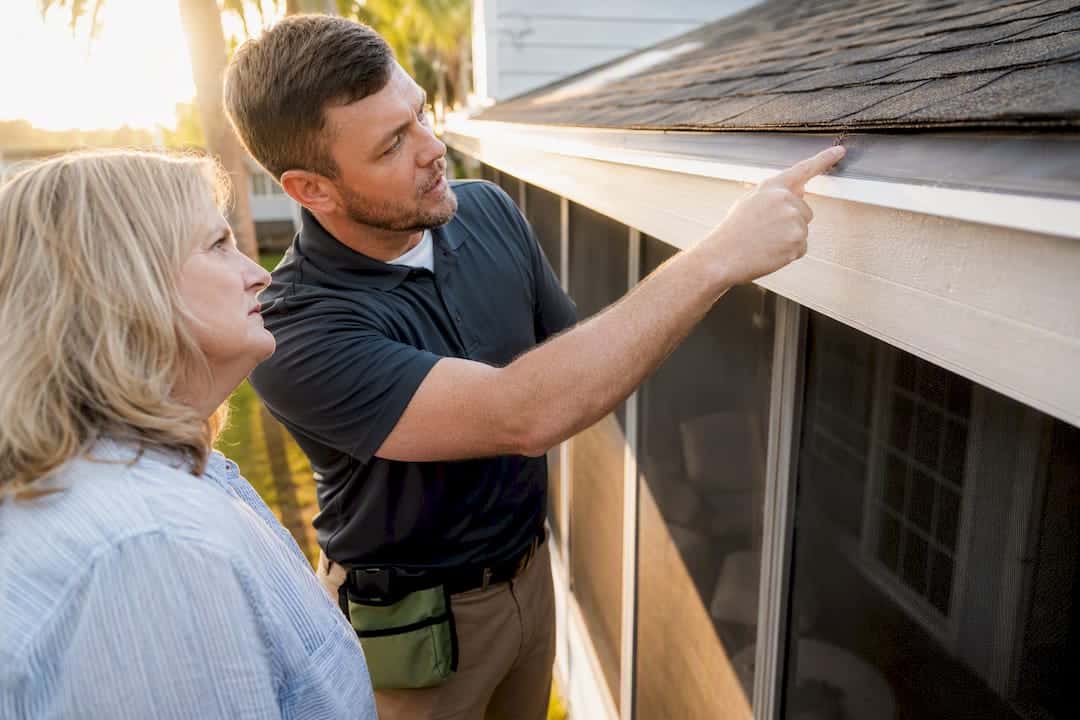
A seam that drips only during heavier rain may seem harmless until you notice the mulch trench below it. A bracket that has pulled slightly loose may not bother you until the next storm shifts that section enough to create a low spot. These are the moments when routine maintenance saves money, not because the repair itself is dramatic, but because it prevents the runoff pattern from worsening.
The most important thing is to connect the symptom to the consequence. The stain on the fascia, the damp strip near the wall, and the washed-out bed edge are not separate issues. They are clues from the same system.
Where the water lands is half the job
One of the most useful pieces of Florida-Friendly guidance is simple: keep water on site when possible, and send it to places that can absorb it. For homeowners, that turns the downspout discharge area into prime real estate.
If runoff is landing on bare soil, expect erosion. If it empties beside the house, expect unnecessary moisture near the structure. If it runs across hardscape before reaching a lawn or bed, watch for splash and sediment. The goal is not just to move water away, but to move it somewhere useful and absorbent.
This is particularly important in yards with sandy soils and fast-moving stormwater. Water can disappear quickly into some spots and skim across others, so observation matters. One downspout may be behaving perfectly while another sends a steady stream into an area that cannot handle it.
For homeowners who care about their landscaping, this mindset changes the conversation. Gutters are not only a roof accessory. They are part of how the front beds survive summer rain, how the lawn avoids repeated washout, and how the side yard avoids turning into a damp strip that never quite dries.
A practical routine for the rest of the year
Once you stop treating gutter care as a one-time chore, it gets easier. You are not looking for perfection. You are looking for changes.
If a section always drained well but suddenly overflows, something shifted. If a flower bed starts eroding under one corner, the discharge pattern probably changed. If the area near the foundation stays wetter than it used to, do not write it off as weather. Follow the water.
A smart year-round gutter checklist Florida homeowners can stick to is built on that habit of noticing. Walk the perimeter after hard rain when you can. Glance at corners and downspouts during ordinary yard work. Clear debris before it compacts. Fix small attachment or flow issues before the next storm season tests them for you.
That approach also makes replacement decisions less confusing. If you know exactly where your current system fails, you can ask better questions about materials, layout, seamless options, guards, color choices, and discharge planning. You are no longer shopping for “new gutters.” You are solving a runoff problem with the house, yard, and Florida weather in mind.
Around Dunnellon, that is really the heart of it. Gutter care is not glamorous, and it is rarely urgent until the day it suddenly is. But when the system is maintained year-round, the payoff is visible everywhere water does not go: not against the house, not into muddy trenches by the pool cage, not across the walkway, and not into the planting beds you just refreshed. That is quiet, practical home maintenance at its best.
Ends · EXTERIORGUIDE597